Product design grounded in human behaviour
Focusing on personalisation, strategy and AI-applied design

/ Philosophy
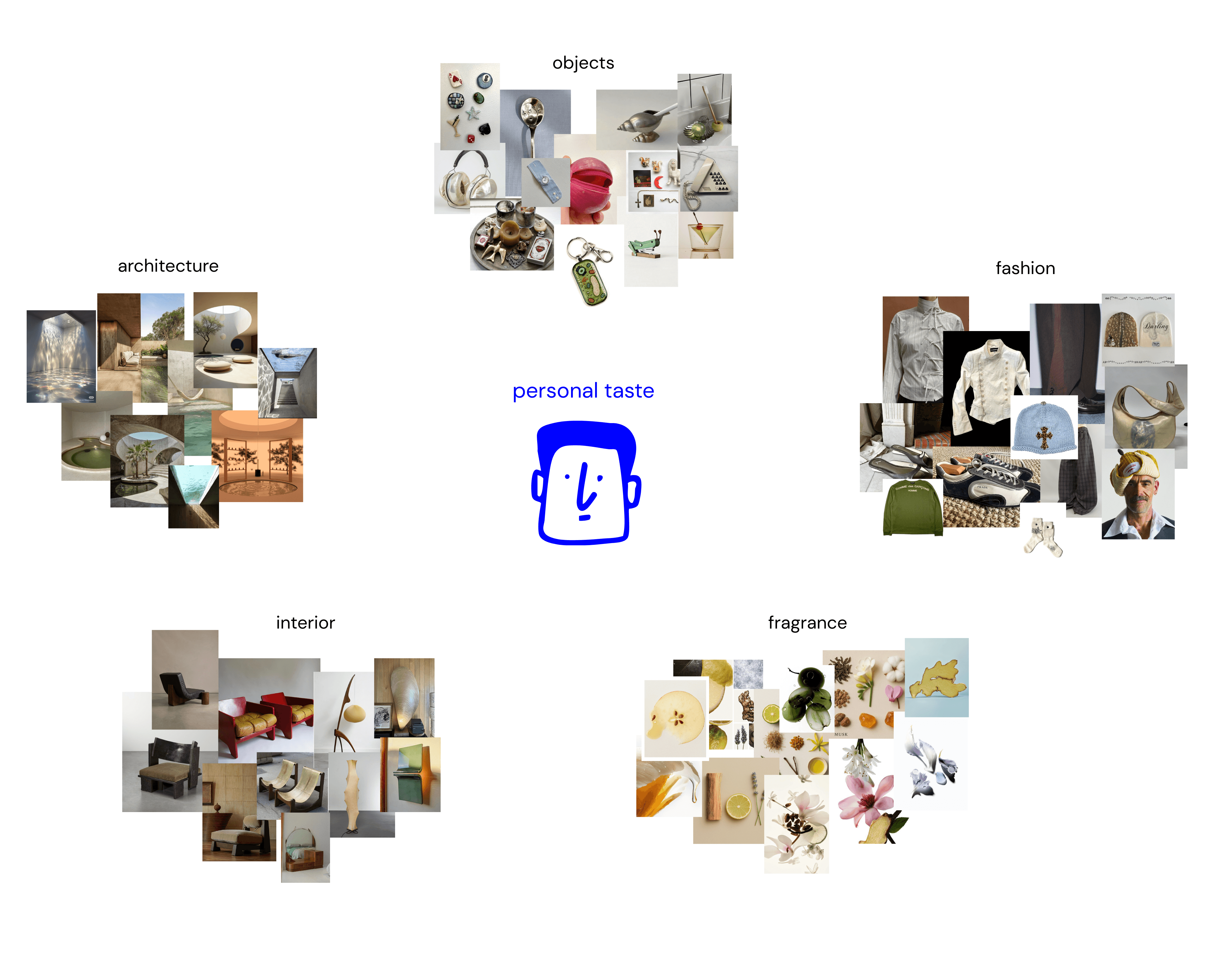
Data-driven personalisation should still feel human, not algorithmic. With a background in design and user research, I work at the intersection of human preference and AI recommendations. My focus is on making sure that as the underlying models keep evolving, the experience remains consistent, high-quality, and true to the brand.
/ Principles
I work with these principles
1.
What users click, save, and skip reveals more than what they can articulate.
Behavioural signals over stated preferences
2.
Designing for variance means building a buffer into your strategy. Instead of focusing on a single, rigid feature, I maintain a curated backlog of adjacent, solvable problems so the product can pivot without friction.
Design for probabilistic systems
3.
How something looks, sounds, and moves shapes whether users trust it, return to it, and recommend it.
Aesthetic decisions are product decisions
4.
Left alone, AI amplifies consensus, it scales the average faster. The original thinking still has to come from a person; AI multiplies intent, it doesn't manufacture it.
The human is the source of intent, AI is the multiplier
5.
Modularity is about speed and structural integrity. It allows us to isolate variables for rapid, targeted testing while keeping the overall system stable enough to scale.
Modularity
/ FAQ
Ask away, start with a thread below.
/ Blog
A look into the subjects I’m currently researching and writing about

Product design grounded in human behaviour
Focusing on personalisation, strategy and AI-applied design
/ Philosophy
Data-driven personalisation should still feel human, not algorithmic. With a background in design and user research, I work at the intersection of human preference and AI recommendations. My focus is on making sure that as the underlying models keep evolving, the experience remains consistent, high-quality, and true to the brand.
/ Principles
I work with these principles
1.
What users click, save, and skip reveals more than what they can articulate.
Behavioural signals over stated preferences
2.
Designing for variance means building a buffer into your strategy. Instead of focusing on a single, rigid feature, I maintain a curated backlog of adjacent, solvable problems so the product can pivot without friction.
Design for probabilistic systems
3.
How something looks, sounds, and moves shapes whether users trust it, return to it, and recommend it.
Aesthetic decisions are product decisions
4.
Left alone, AI amplifies consensus, it scales the average faster. The original thinking still has to come from a person; AI multiplies intent, it doesn't manufacture it.
The human is the source of intent, AI is the multiplier
5.
Modularity is about speed and structural integrity. It allows us to isolate variables for rapid, targeted testing while keeping the overall system stable enough to scale.
Modularity
/ FAQ
Ask away, start with a thread below.
/ Blog
A look into the subjects I’m currently researching and writing about
Product design grounded in human behaviour
Focusing on personalisation, strategy and AI-applied design
/ Philosophy
Data-driven personalisation should still feel human, not algorithmic. With a background in design and user research, I work at the intersection of human preference and AI recommendations. My focus is on making sure that as the underlying models keep evolving, the experience remains consistent, high-quality, and true to the brand.
/ Principles
I work with these principles
1.
What users click, save, and skip reveals more than what they can articulate.
Behavioural signals over stated preferences
2.
Designing for variance means building a buffer into your strategy. Instead of focusing on a single, rigid feature, I maintain a curated backlog of adjacent, solvable problems so the product can pivot without friction.
Design for probabilistic systems
3.
How something looks, sounds, and moves shapes whether users trust it, return to it, and recommend it.
Aesthetic decisions are product decisions
4.
Left alone, AI amplifies consensus, it scales the average faster. The original thinking still has to come from a person; AI multiplies intent, it doesn't manufacture it.
The human is the source of intent, AI is the multiplier
5.
Modularity is about speed and structural integrity. It allows us to isolate variables for rapid, targeted testing while keeping the overall system stable enough to scale.
Modularity