What a Perfume Looks Like
Notes from a scent experiment, and the personalisation layer hiding underneath it.

You know a scent before you can articulate it.
A specific room. A particular afternoon or even texture you couldn't describe if asked. The smell arrives with pictures, before any word shows up to explain why the two are connected.
Smell and sight are different senses, run by different parts of the brain. And yet a fragrance can hand you an image precise enough to feel like a memory, sometimes of a place you've never been.
Fascinated with this, I ran a small experiment with my Santa Maria Novella perfume sample to test if I could map this invisible instinct into visuals and understand the structural mechanism of human taste.
Note: A word on why this house.
Santa Maria Novellaisn't a perfume brand in the modern sense.The Heritage: Founded in 1221 as a Florentine apothecary, the house still uses ancient monastic recipes.
The Contrast: Unlike modern perfumes engineered for sanded-down, mass appeal, these scents remain raw and material, very much "Botanical archivist".
The Purpose: Testing if scent can evoke a precise image requires unpolished, highly specific fragrances, making this house the solid baseline..
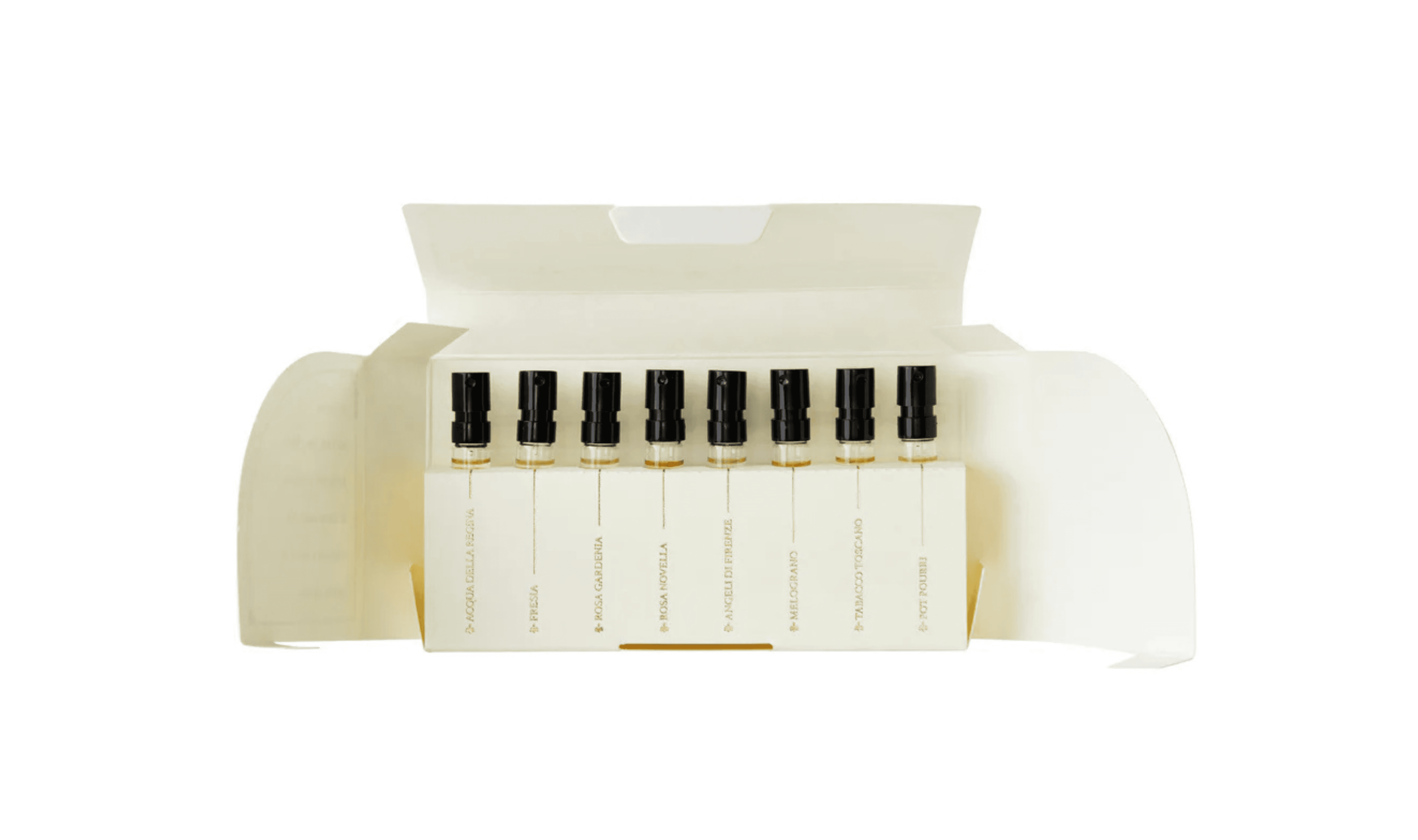
Fig. 1 - Santa Maria Novella - Discovery Kit 1221 Edition
1. The set-up
When testing the sample, I tried them one at a time, deliberately, with a notebook open. The rule I gave myself was to ask what it looks like. Then write down everything that surfaced during the process. I chose 5-6 categories: Colour, texture, the quality of the light, the material, the kind of room it belonged in, the era it came from.
Work Progress
Using my mapped frameworks and AI-assistant to break the bottleneck of finding the right words. The core process was visual validation: searching the generated vocabulary as images and testing them against my raw sensory response. Did the picture match the scent? It was almost always an immediate, instinctual yes or no.
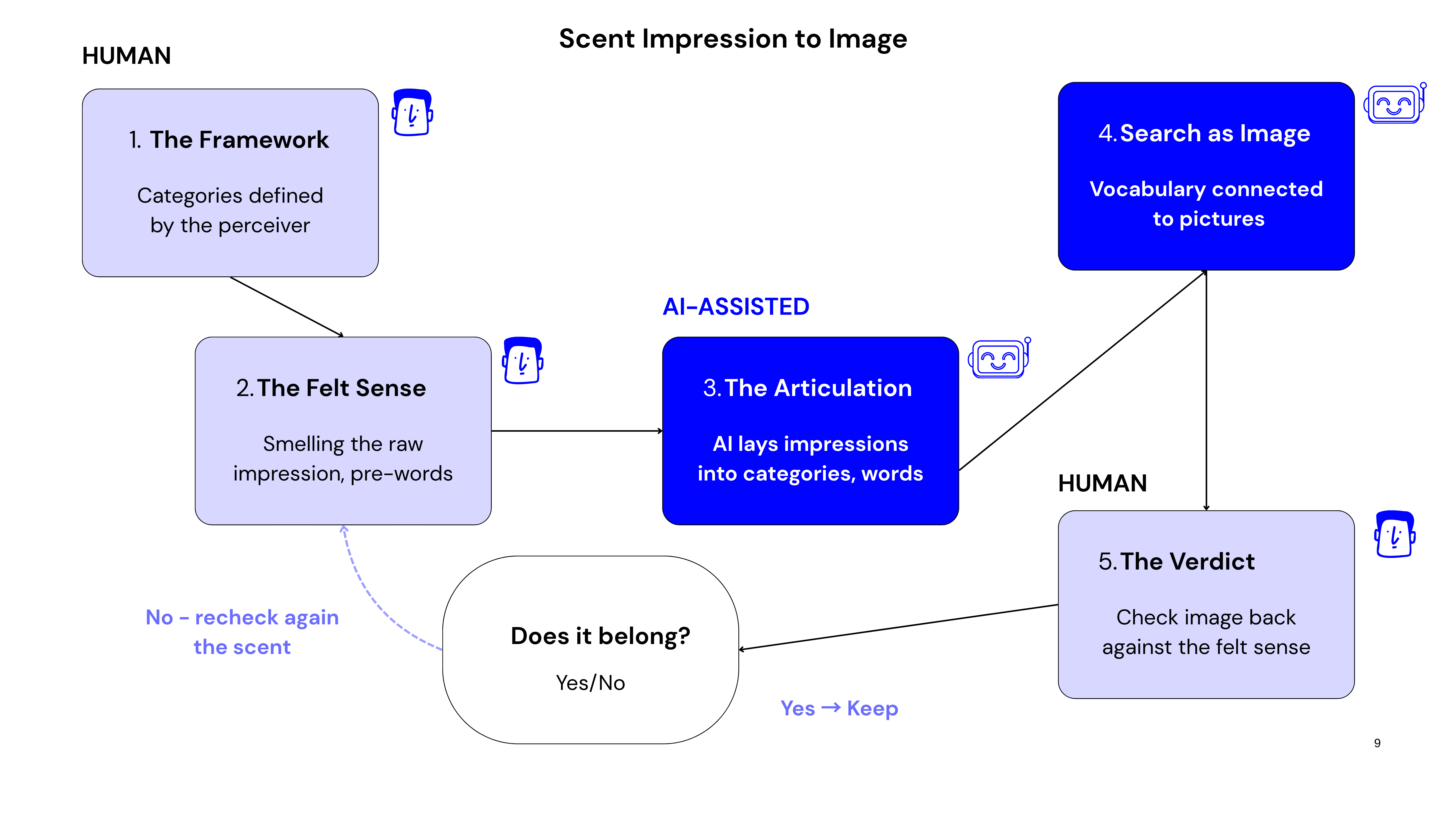
Fig. 2 - Experiment Process
A few of them came back quite specific, these are some examples and findings:
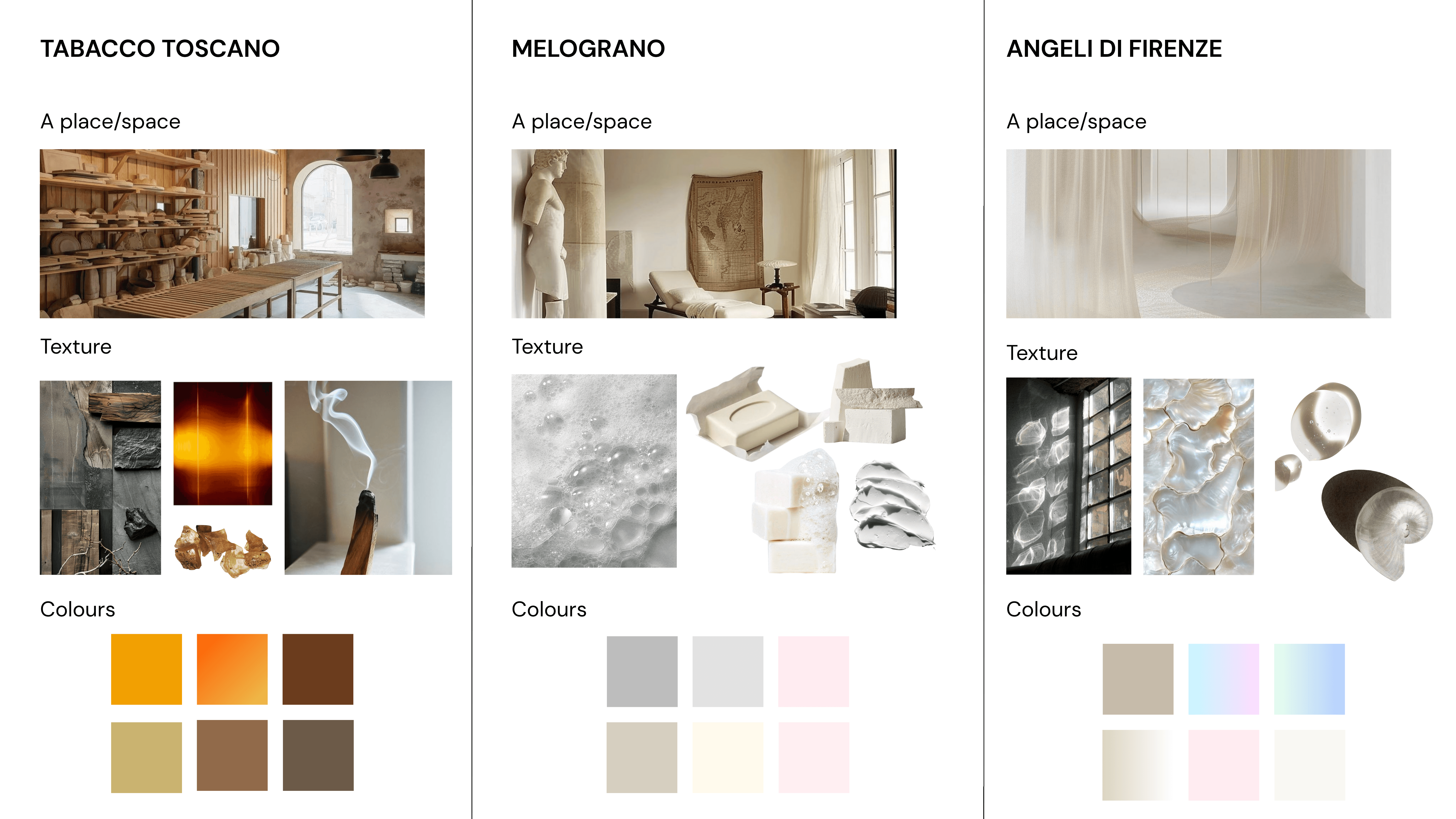
Fig. 3 - Tabacco Toscano . Melograno . Angeli Di Firenze
Tabacco Toscano was the warm one.
Smoky and a little sweet.
Space: It felt exactly like a cozy, old-school library in the late afternoon
Visuals: Filled with sepia tones, warm amber light, and the scent of aged paper and a fireplace that recently went out.
Melograno went cold and ceremonial.
Space: It felt like stepping into an ancient stone church, all soapy white tones, pale plaster.
Visuals: It has a clean, waxy, statuesque quality, less like an everyday room and more like the quiet air left behind an hour after a ritual ends.
Angeli di Firenze was pure fluid transparency.
Space: It brought to mind pale aquamarine, pearl, and soft lavender light passing through water.
Visuals: Everything about it felt serene, floating, and bright, less like a physical building and more like a clean, sunlit room where the light reflects off polished limestone.
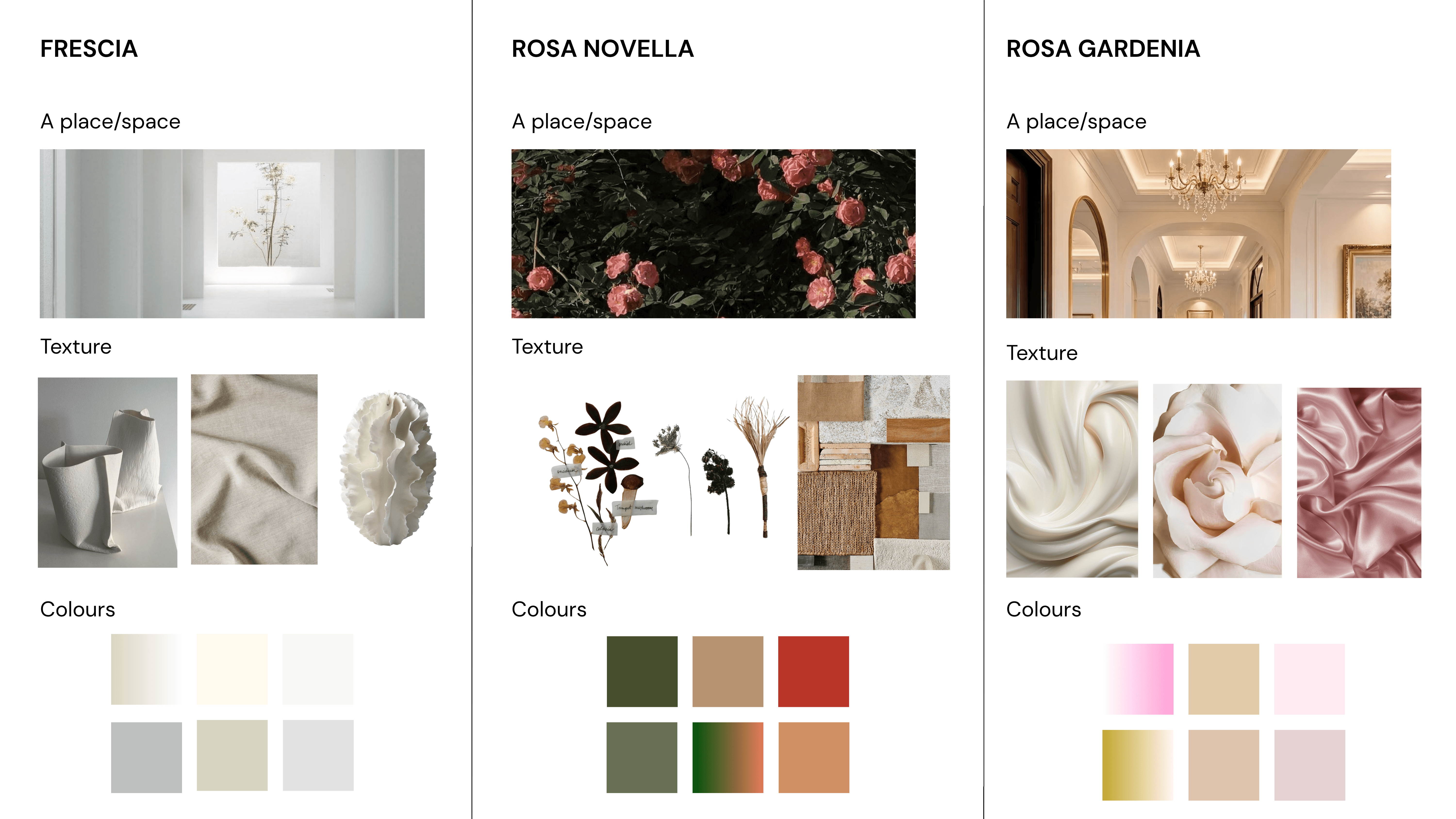
Fig. 4 - Frescia . Rosa Novella . Rosa Gardenia
Frescia was incredibly sharp and brilliantly clean.
Space: It’s vibrant and starchy, bringing to mind the crisp scent of fresh laundry in an overexposed, minimalist white room.
Visuals: It has a cool, almost effervescent energy, triggering images of stiff linen, cold porcelain, and pale silver tones.
Rosa Novella went in a deeply earthy, botanical direction.
Space: It smells old and herbaceous, like the dry warmth of a historic, sun-baked garden.
Visuals: It brings up high-contrast, matte visuals, think crushed, dried rose petals surrounded by warm clay, dusty ochre, and muted brownish-pinks.
Rosa Gardenia is pure, luxurious softness, this was a very clear one.
Space: It’s creamy and powdery, evoking a soft-focus space filled with warm ivory and blush pink.
Visuals: The textures it brings to mind are rich and buttery, like heavy draped silk, thick flower petals, and smooth, polished marble under warm lighting.
As an honest observation, I didn't smell Tabacco Toscano and see one exact wood workshop like the image. It's not a math equation and it doesn't decode into a single right answer. What it produced was a strong directional sense, a confident this belongs near here, an adjacent space rather than a pinpoint. The image was vague at the centre and sure at the edges. I couldn't tell you the room, but I could tell you, quickly and without much doubt, the kind of room, and rule out all the kinds it wasn't.
Because scent defies literal description, translating it into a visual map is simply a more efficient system. Getting someone immediately into the visual world their taste (personal preferences) lives in is vastly more useful than relying on a slow, literal description.
2. Mapping the blueprint
If you look at those six samples breakdowns, it is easy to assume the process is subjective, just a matter of smelling something and guessing at a vibe. It isn't. The reason the visual translations are so accurate is because they are following an underlying architecture.
To prove this wasn't just a creative writing exercise, I did a map to showcase how these sensory inputs translate into a definitive aesthetic.
Cognitive Mapping
The first part is Cognitive Mapping. This breaks down exactly how the body translates a scent into an image. It starts with the raw input (the scent) and immediately filters it through visual primitives, color, texture, and weight. Those primitives trigger an image, which is anchored in memory and association. By tracing this pathway, we can move past the abstract "notes" of a perfume and route it directly into a concrete Aesthetic Taxonomy.
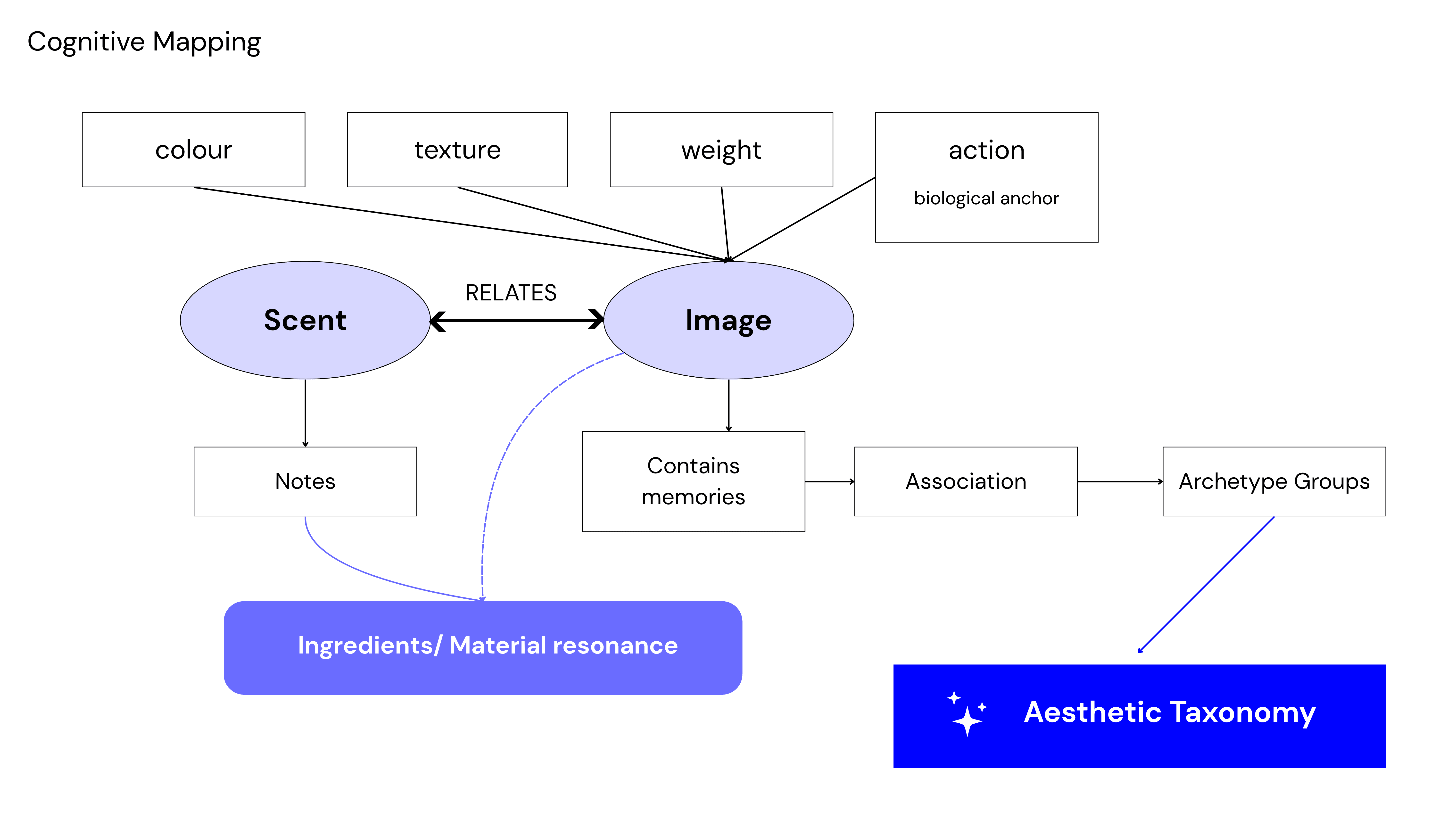
Fig. 5 - Cognitive Mapping (Scent and Image relation)
Cultural Resonance
The second part is Cultural Resonance. A scent inherits the world it came from. This map shows how the human relation to a scent (tied to a specific place, era, or space) intersects directly with broader aesthetic movements (history, architecture, art). When those two pathways converge, they create Contextual Relevance. This is why a scent doesn't just smell "old", it smells specifically like a mid-century library or a neoclassical church.
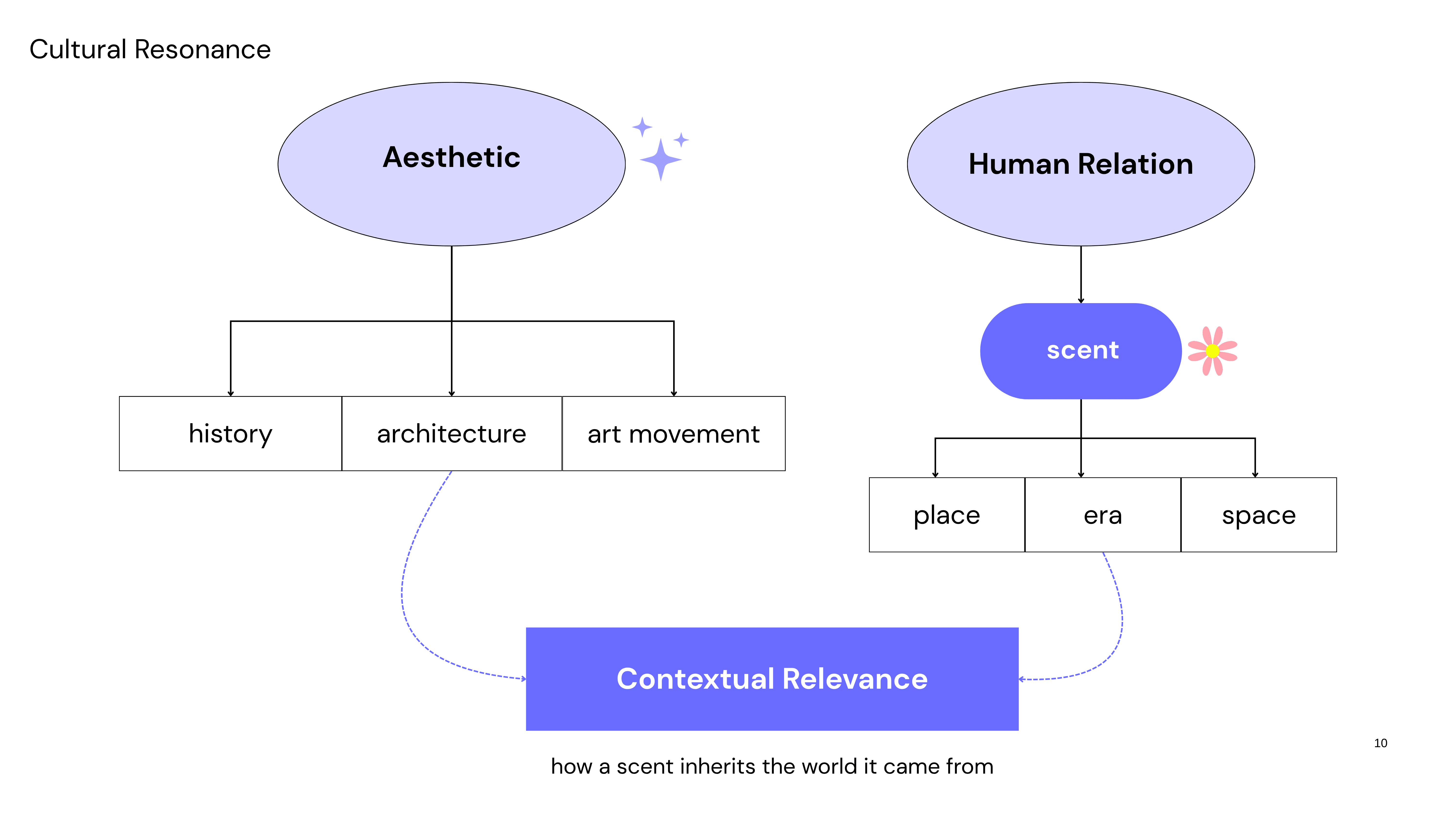
Fig, 6 - Cultural Resonance
By running any sensory input through these two maps, we are following a clear, navigable logic gate from an invisible feeling to a highly specific visual world.
3. Where I think this goes: Personalisation, tech and market opportunity
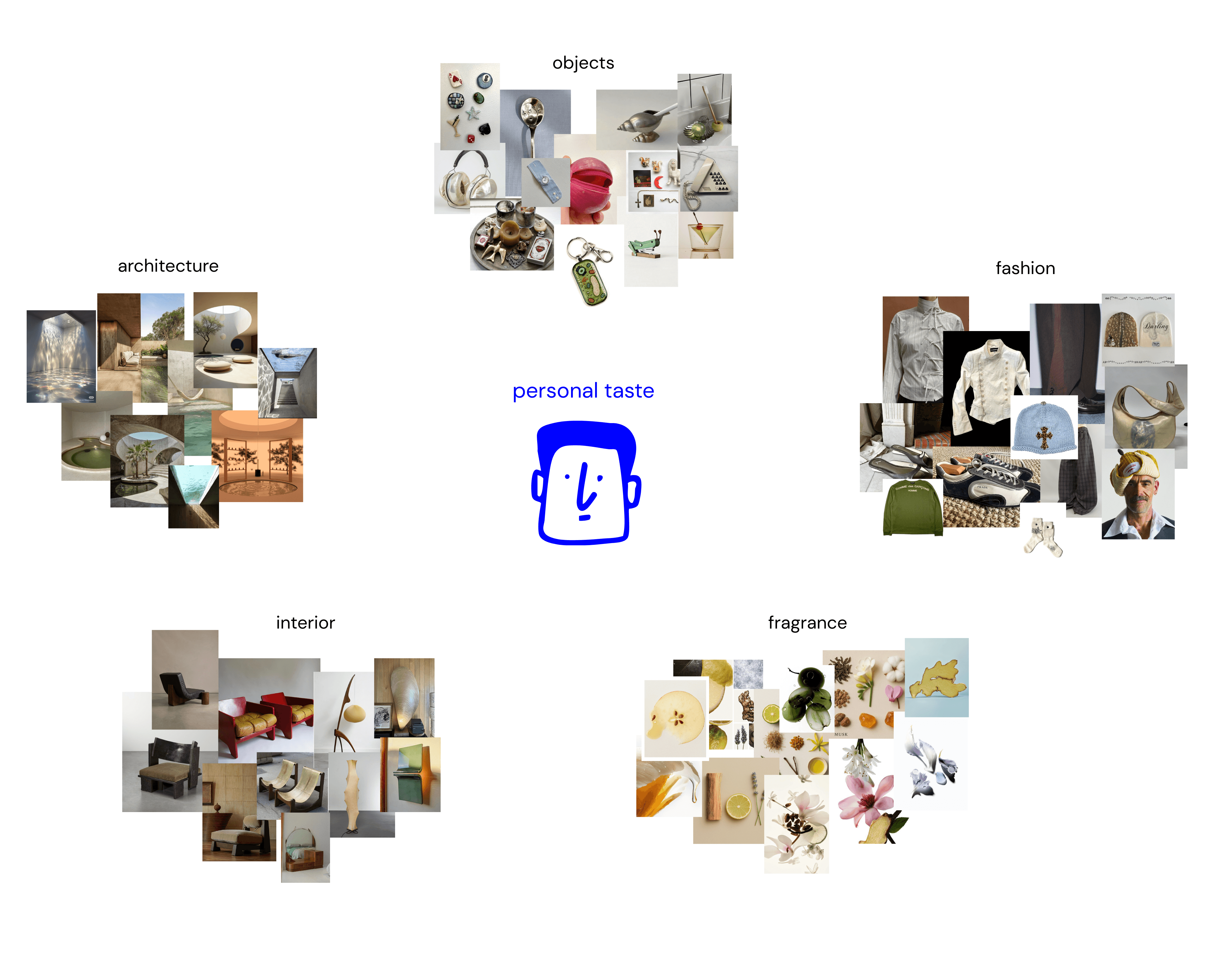
I have written before that taste is a pattern, not a category. But this scent mapping revealed that the pattern sits underneath the senses entirely. A scent, carrying no visual properties, triggered a visual-material response. The visual is the interface where taste becomes legible.
If an invisible input can predictably call up a specific image or adjacent spaces, that gives the blueprint for how to build a taste framework.
Of course, the initial mapping was a manual experiment. But the real goal of this framework is automation. By translating this cognitive map into a functional digital system, a mechanism can be built that ingests sensory data and maps it to a visual output, defining a user's aesthetic preferences.
Current Market Methods of Understanding User's Taste
Look at how this category sells to you right now. You take a quiz. It asks what scent family you like, what mood you're after, what your lifestyle is. You then answer in words, and it maps your words to a bottle. Current tools in fashion, interiors, and fragrance work this way underneath. They all ask you to describe your taste first, then match the description.
A system built on self-report can only ever be as good as your ability to articulate, and that ability is the bottleneck, not the taste.
Future Application
The market application here hands businesses a functional categorisation system to articulate what they are selling, allowing them to target buyers based on visceral aesthetic alignment rather than generic demographics, serving niche buyers and consumers looking to build their lifestyle more consistently. Simultaneously, it gives the buyer a shortcut. Instead of endlessly scrolling through fragmented categories and guessing, they are given a clear, directional sense of their own taste, allowing them to instantly identify the products that belong in their world.

/ Explore More Articles
What a Perfume Looks Like
Notes from a scent experiment, and the personalisation layer hiding underneath it.
You know a scent before you can articulate it.
A specific room. A particular afternoon or even texture you couldn't describe if asked. The smell arrives with pictures, before any word shows up to explain why the two are connected.
Smell and sight are different senses, run by different parts of the brain. And yet a fragrance can hand you an image precise enough to feel like a memory, sometimes of a place you've never been.
Fascinated with this, I ran a small experiment with my Santa Maria Novella perfume sample to test if I could map this invisible instinct into visuals and understand the structural mechanism of human taste.
Note: A word on why this house.
Santa Maria Novellaisn't a perfume brand in the modern sense.The Heritage: Founded in 1221 as a Florentine apothecary, the house still uses ancient monastic recipes.
The Contrast: Unlike modern perfumes engineered for sanded-down, mass appeal, these scents remain raw and material, very much "Botanical archivist".
The Purpose: Testing if scent can evoke a precise image requires unpolished, highly specific fragrances, making this house the solid baseline..
Fig. 1 - Santa Maria Novella - Discovery Kit 1221 Edition
1. The set-up
When testing the sample, I tried them one at a time, deliberately, with a notebook open. The rule I gave myself was to ask what it looks like. Then write down everything that surfaced during the process. I chose 5-6 categories: Colour, texture, the quality of the light, the material, the kind of room it belonged in, the era it came from.
Work Progress
Using my mapped frameworks and AI-assistant to break the bottleneck of finding the right words. The core process was visual validation: searching the generated vocabulary as images and testing them against my raw sensory response. Did the picture match the scent? It was almost always an immediate, instinctual yes or no.
Fig. 2 - Experiment Process
A few of them came back quite specific, these are some examples and findings:
Fig. 3 - Tabacco Toscano . Melograno . Angeli Di Firenze
Tabacco Toscano was the warm one.
Smoky and a little sweet.
Space: It felt exactly like a cozy, old-school library in the late afternoon
Visuals: Filled with sepia tones, warm amber light, and the scent of aged paper and a fireplace that recently went out.
Melograno went cold and ceremonial.
Space: It felt like stepping into an ancient stone church, all soapy white tones, pale plaster.
Visuals: It has a clean, waxy, statuesque quality, less like an everyday room and more like the quiet air left behind an hour after a ritual ends.
Angeli di Firenze was pure fluid transparency.
Space: It brought to mind pale aquamarine, pearl, and soft lavender light passing through water.
Visuals: Everything about it felt serene, floating, and bright, less like a physical building and more like a clean, sunlit room where the light reflects off polished limestone.
Fig. 4 - Frescia . Rosa Novella . Rosa Gardenia
Frescia was incredibly sharp and brilliantly clean.
Space: It’s vibrant and starchy, bringing to mind the crisp scent of fresh laundry in an overexposed, minimalist white room.
Visuals: It has a cool, almost effervescent energy, triggering images of stiff linen, cold porcelain, and pale silver tones.
Rosa Novella went in a deeply earthy, botanical direction.
Space: It smells old and herbaceous, like the dry warmth of a historic, sun-baked garden.
Visuals: It brings up high-contrast, matte visuals, think crushed, dried rose petals surrounded by warm clay, dusty ochre, and muted brownish-pinks.
Rosa Gardenia is pure, luxurious softness, this was a very clear one.
Space: It’s creamy and powdery, evoking a soft-focus space filled with warm ivory and blush pink.
Visuals: The textures it brings to mind are rich and buttery, like heavy draped silk, thick flower petals, and smooth, polished marble under warm lighting.
As an honest observation, I didn't smell Tabacco Toscano and see one exact wood workshop like the image. It's not a math equation and it doesn't decode into a single right answer. What it produced was a strong directional sense, a confident this belongs near here, an adjacent space rather than a pinpoint. The image was vague at the centre and sure at the edges. I couldn't tell you the room, but I could tell you, quickly and without much doubt, the kind of room, and rule out all the kinds it wasn't.
Because scent defies literal description, translating it into a visual map is simply a more efficient system. Getting someone immediately into the visual world their taste (personal preferences) lives in is vastly more useful than relying on a slow, literal description.
2. Mapping the blueprint
If you look at those six samples breakdowns, it is easy to assume the process is subjective, just a matter of smelling something and guessing at a vibe. It isn't. The reason the visual translations are so accurate is because they are following an underlying architecture.
To prove this wasn't just a creative writing exercise, I did a map to showcase how these sensory inputs translate into a definitive aesthetic.
Cognitive Mapping
The first part is Cognitive Mapping. This breaks down exactly how the body translates a scent into an image. It starts with the raw input (the scent) and immediately filters it through visual primitives, color, texture, and weight. Those primitives trigger an image, which is anchored in memory and association. By tracing this pathway, we can move past the abstract "notes" of a perfume and route it directly into a concrete Aesthetic Taxonomy.
Fig. 5 - Cognitive Mapping (Scent and Image relation)
Cultural Resonance
The second part is Cultural Resonance. A scent inherits the world it came from. This map shows how the human relation to a scent (tied to a specific place, era, or space) intersects directly with broader aesthetic movements (history, architecture, art). When those two pathways converge, they create Contextual Relevance. This is why a scent doesn't just smell "old", it smells specifically like a mid-century library or a neoclassical church.
Fig, 6 - Cultural Resonance
By running any sensory input through these two maps, we are following a clear, navigable logic gate from an invisible feeling to a highly specific visual world.
3. Where I think this goes: Personalisation, tech and market opportunity
I have written before that taste is a pattern, not a category. But this scent mapping revealed that the pattern sits underneath the senses entirely. A scent, carrying no visual properties, triggered a visual-material response. The visual is the interface where taste becomes legible.
If an invisible input can predictably call up a specific image or adjacent spaces, that gives the blueprint for how to build a taste framework.
Of course, the initial mapping was a manual experiment. But the real goal of this framework is automation. By translating this cognitive map into a functional digital system, a mechanism can be built that ingests sensory data and maps it to a visual output, defining a user's aesthetic preferences.
Current Market Methods of Understanding User's Taste
Look at how this category sells to you right now. You take a quiz. It asks what scent family you like, what mood you're after, what your lifestyle is. You then answer in words, and it maps your words to a bottle. Current tools in fashion, interiors, and fragrance work this way underneath. They all ask you to describe your taste first, then match the description.
A system built on self-report can only ever be as good as your ability to articulate, and that ability is the bottleneck, not the taste.
Future Application
The market application here hands businesses a functional categorisation system to articulate what they are selling, allowing them to target buyers based on visceral aesthetic alignment rather than generic demographics, serving niche buyers and consumers looking to build their lifestyle more consistently. Simultaneously, it gives the buyer a shortcut. Instead of endlessly scrolling through fragmented categories and guessing, they are given a clear, directional sense of their own taste, allowing them to instantly identify the products that belong in their world.
/ Explore More Articles
What a Perfume Looks Like
Notes from a scent experiment, and the personalisation layer hiding underneath it.
You know a scent before you can articulate it.
A specific room. A particular afternoon or even texture you couldn't describe if asked. The smell arrives with pictures, before any word shows up to explain why the two are connected.
Smell and sight are different senses, run by different parts of the brain. And yet a fragrance can hand you an image precise enough to feel like a memory, sometimes of a place you've never been.
Fascinated with this, I ran a small experiment with my Santa Maria Novella perfume sample to test if I could map this invisible instinct into visuals and understand the structural mechanism of human taste.
Note: A word on why this house.
Santa Maria Novellaisn't a perfume brand in the modern sense.The Heritage: Founded in 1221 as a Florentine apothecary, the house still uses ancient monastic recipes.
The Contrast: Unlike modern perfumes engineered for sanded-down, mass appeal, these scents remain raw and material, very much "Botanical archivist".
The Purpose: Testing if scent can evoke a precise image requires unpolished, highly specific fragrances, making this house the solid baseline..
Fig. 1 - Santa Maria Novella - Discovery Kit 1221 Edition
1. The set-up
When testing the sample, I tried them one at a time, deliberately, with a notebook open. The rule I gave myself was to ask what it looks like. Then write down everything that surfaced during the process. I chose 5-6 categories: Colour, texture, the quality of the light, the material, the kind of room it belonged in, the era it came from.
Work Progress
Using my mapped frameworks and AI-assistant to break the bottleneck of finding the right words. The core process was visual validation: searching the generated vocabulary as images and testing them against my raw sensory response. Did the picture match the scent? It was almost always an immediate, instinctual yes or no.
Fig. 2 - Experiment Process
A few of them came back quite specific, these are some examples and findings:
Fig. 3 - Tabacco Toscano . Melograno . Angeli Di Firenze
Tabacco Toscano was the warm one.
Smoky and a little sweet.
Space: It felt exactly like a cozy, old-school library in the late afternoon
Visuals: Filled with sepia tones, warm amber light, and the scent of aged paper and a fireplace that recently went out.
Melograno went cold and ceremonial.
Space: It felt like stepping into an ancient stone church, all soapy white tones, pale plaster.
Visuals: It has a clean, waxy, statuesque quality, less like an everyday room and more like the quiet air left behind an hour after a ritual ends.
Angeli di Firenze was pure fluid transparency.
Space: It brought to mind pale aquamarine, pearl, and soft lavender light passing through water.
Visuals: Everything about it felt serene, floating, and bright, less like a physical building and more like a clean, sunlit room where the light reflects off polished limestone.
Fig. 4 - Frescia . Rosa Novella . Rosa Gardenia
Frescia was incredibly sharp and brilliantly clean.
Space: It’s vibrant and starchy, bringing to mind the crisp scent of fresh laundry in an overexposed, minimalist white room.
Visuals: It has a cool, almost effervescent energy, triggering images of stiff linen, cold porcelain, and pale silver tones.
Rosa Novella went in a deeply earthy, botanical direction.
Space: It smells old and herbaceous, like the dry warmth of a historic, sun-baked garden.
Visuals: It brings up high-contrast, matte visuals, think crushed, dried rose petals surrounded by warm clay, dusty ochre, and muted brownish-pinks.
Rosa Gardenia is pure, luxurious softness, this was a very clear one.
Space: It’s creamy and powdery, evoking a soft-focus space filled with warm ivory and blush pink.
Visuals: The textures it brings to mind are rich and buttery, like heavy draped silk, thick flower petals, and smooth, polished marble under warm lighting.
As an honest observation, I didn't smell Tabacco Toscano and see one exact wood workshop like the image. It's not a math equation and it doesn't decode into a single right answer. What it produced was a strong directional sense, a confident this belongs near here, an adjacent space rather than a pinpoint. The image was vague at the centre and sure at the edges. I couldn't tell you the room, but I could tell you, quickly and without much doubt, the kind of room, and rule out all the kinds it wasn't.
Because scent defies literal description, translating it into a visual map is simply a more efficient system. Getting someone immediately into the visual world their taste (personal preferences) lives in is vastly more useful than relying on a slow, literal description.
2. Mapping the blueprint
If you look at those six samples breakdowns, it is easy to assume the process is subjective, just a matter of smelling something and guessing at a vibe. It isn't. The reason the visual translations are so accurate is because they are following an underlying architecture.
To prove this wasn't just a creative writing exercise, I did a map to showcase how these sensory inputs translate into a definitive aesthetic.
Cognitive Mapping
The first part is Cognitive Mapping. This breaks down exactly how the body translates a scent into an image. It starts with the raw input (the scent) and immediately filters it through visual primitives, color, texture, and weight. Those primitives trigger an image, which is anchored in memory and association. By tracing this pathway, we can move past the abstract "notes" of a perfume and route it directly into a concrete Aesthetic Taxonomy.
Fig. 5 - Cognitive Mapping (Scent and Image relation)
Cultural Resonance
The second part is Cultural Resonance. A scent inherits the world it came from. This map shows how the human relation to a scent (tied to a specific place, era, or space) intersects directly with broader aesthetic movements (history, architecture, art). When those two pathways converge, they create Contextual Relevance. This is why a scent doesn't just smell "old", it smells specifically like a mid-century library or a neoclassical church.
Fig, 6 - Cultural Resonance
By running any sensory input through these two maps, we are following a clear, navigable logic gate from an invisible feeling to a highly specific visual world.
3. Where I think this goes: Personalisation, tech and market opportunity
I have written before that taste is a pattern, not a category. But this scent mapping revealed that the pattern sits underneath the senses entirely. A scent, carrying no visual properties, triggered a visual-material response. The visual is the interface where taste becomes legible.
If an invisible input can predictably call up a specific image or adjacent spaces, that gives the blueprint for how to build a taste framework.
Of course, the initial mapping was a manual experiment. But the real goal of this framework is automation. By translating this cognitive map into a functional digital system, a mechanism can be built that ingests sensory data and maps it to a visual output, defining a user's aesthetic preferences.
Current Market Methods of Understanding User's Taste
Look at how this category sells to you right now. You take a quiz. It asks what scent family you like, what mood you're after, what your lifestyle is. You then answer in words, and it maps your words to a bottle. Current tools in fashion, interiors, and fragrance work this way underneath. They all ask you to describe your taste first, then match the description.
A system built on self-report can only ever be as good as your ability to articulate, and that ability is the bottleneck, not the taste.
Future Application
The market application here hands businesses a functional categorisation system to articulate what they are selling, allowing them to target buyers based on visceral aesthetic alignment rather than generic demographics, serving niche buyers and consumers looking to build their lifestyle more consistently. Simultaneously, it gives the buyer a shortcut. Instead of endlessly scrolling through fragmented categories and guessing, they are given a clear, directional sense of their own taste, allowing them to instantly identify the products that belong in their world.